
Embedded system architectures continually demand denser, faster, and more power-efficient storage configurations to execute advanced local firmware. As modern microcontrollers expand in computational capability, onboard code storage increasingly shifts toward external serial architectures.
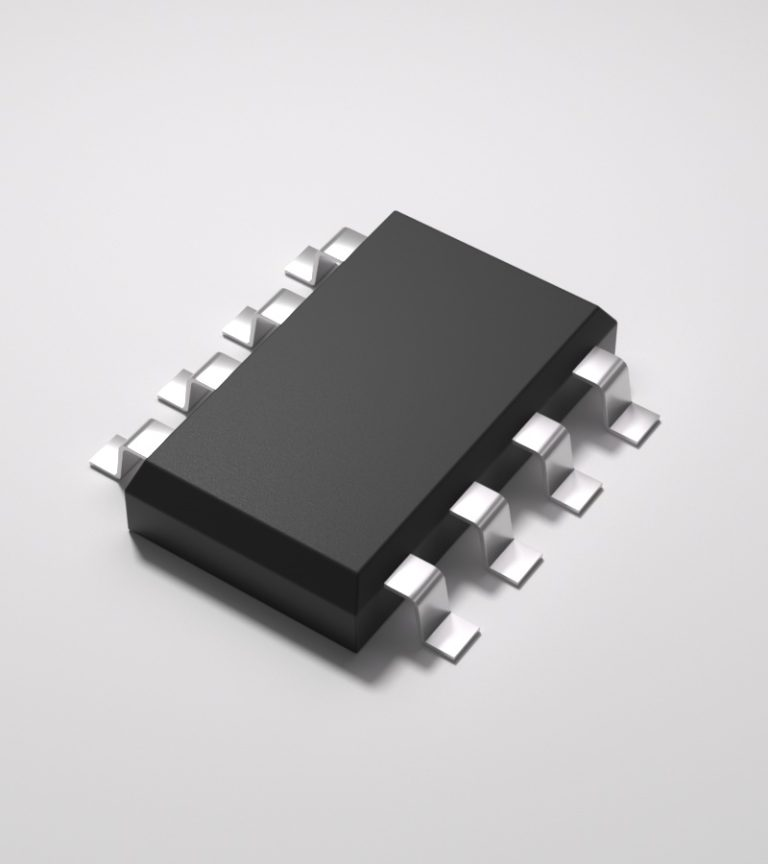
Engineers must balance package real estate against throughput when designing network edge devices, industrial automation systems, and connected hardware. Within these compact spaces, Winbond 128Mb serial flash memory provides non-volatile storage with specified read timing and multiple interface modes.
Non-volatile memory stores firmware images, boot code, and persistent system parameters, while volatile memory is typically used for runtime data and execution caches. Selecting high-reliability flash silicon prevents data corruption and minimizes read latency across demanding thermal cycles.
A clear understanding of internal flash architecture, interface performance, and supply chain dynamics helps development teams make informed architectural decisions. Hardware engineers can optimize board routing while procurement specialists secure consistent component delivery.
Architectural Capabilities of Winbond 128Mb Serial Flash Memory
Manufactured by Winbond, the W25Q128JVSIQ is a 128-Mbit serial NOR flash memory device with a total capacity of 16 MiB, organized into 65,536 pages of 256 bytes each.
System designers benefit from the device’s flexible interface architecture, supporting standard Serial Peripheral Interface alongside Dual and Quad SPI. By supporting Quad SPI clock rates reaching 133MHz, the component achieves equivalent transfer rates of 532MHz for continuous read operations.
Operating within a standard 2.7V to 3.6V supply range, the device features an active read current as low as 4mA. In power-down state, current consumption drops below 1 microampere, making it ideal for battery-powered environmental monitors and remote sensing equipment.
Packaged in an industry-standard 8-pin SOIC 208-mil footprint, the W25Q128JVSIQ model conserves board space while facilitating automated high-speed surface-mount assembly. The unified footprint simplifies PCB layout migration from lower-density SPI devices without demanding extensive redesign work.
The device also includes advanced security enhancements, such as individual block locking and three 256-byte security registers with OTP lock capabilities. The three 256-byte security registers provide additional storage for user-defined data, and their OTP lock functions can prevent further modification after the relevant areas are locked.
High-Speed Performance and System Integration Strategies
Integrating serial flash memory into modern system-on-chip architectures requires thoughtful design to prevent interface bottlenecks. Traditional parallel NOR architectures once dominated high-speed boot systems, but high pin counts increased routing complexity and total board expense.
Modern Quad SPI implementations enable Execute-in-Place capabilities, allowing host microprocessors to run code directly from external storage. By eliminating the necessity of shadowing complete firmware images into external RAM, system architects significantly lower bill of materials costs.
In complex industrial designs, integrating Winbond 128Mb serial flash memory provides designers with flexible bus sharing across multiple peripherals. Dedicated chip-select lines allow microcontrollers to access telemetry sensors and memory arrays over a unified SPI bus infrastructure.
Thermal performance remains another crucial consideration when designing high-speed digital electronics for harsh factory environments. The W25Q128JVSIQ operates across an extended industrial temperature range of -40°C to +85°C without compromising data retention integrity.
Data retention specifications exceed 20 years, supported by an endurance rating of 100,000 erase and program cycles per sector. Such robust physical parameters protect embedded devices deployed in remote field stations where maintenance visits are impractical.
Furthermore, uniform 4KB sectors enable efficient resource utilization during frequent data logging and fine-grained firmware modifications. Developers can update small configuration tables without erasing massive memory blocks, extending the functional operating life of the flash silicon.
Clock signal integrity and trace length matching require careful board layout when routing Quad SPI buses at elevated frequencies. High-speed signal edges generate electromagnetic interference if return paths are poorly referenced against continuous ground planes on adjacent circuit board layers.
Placing appropriately selected decoupling capacitors close to the device power pins helps reduce supply noise and voltage fluctuations. Proper power distribution and PCB layout are also required to maintain stable communication between the memory device and the host processor.
Sourcing Criteria When Partnering with a Flash Memory Supplier
Securing critical memory components in a fluctuating global semiconductor marketplace demands proactive risk management and strong distribution partnerships. Rapid changes in production capacity and raw wafer allocations often trigger extended component lead times across high-volume production lines.
For manufacturing enterprises, identifying an authorized flash memory supplier remains an essential operational task to prevent costly line interruptions. Engineering teams must confirm that distribution partners maintain clear lot traceability, original packaging seals, and certified handling protocols.
Component obsolescence and unexpected product change notifications pose severe threats to products designed for decades of active field service. Establishing relationships with experienced distributors allows companies to receive early notifications and secure end-of-life inventory buffer reserves.
Supply chain vulnerabilities frequently introduce non-authentic components into open markets during periods of global silicon allocation. To eliminate risks, UniBetter sources and procures electronic components from franchised sources to guarantee 100% authentic, quality-assured and brand-new electronic components.
Comprehensive catalog coverage is equally critical for procurement specialists handling diversified bills of materials across multiple simultaneous projects. Furthermore, UniBetter distributes a wide range of electronic components across both industrial automation and consumer electronics.
Having immediate access to franchised inventory enables hardware manufacturers to react quickly when production forecasts adjust upward. Transparent supply pipelines provide engineers with verified part revisions, protecting designs against unauthorized silicon stepping variations and performance discrepancies.
Cost containment strategies must also operate in harmony with quality assurance standards throughout long-term manufacturing agreements. Experienced component distributors leverage global networks to balance localized inventory surpluses against regional factory shortages, ensuring fair market pricing.
Sustaining Long-Term Manufacturing and Deployment Success
The intersection of high-density serial storage and robust procurement strategy forms the foundation of modern hardware development. Reliable NOR flash silicon like the W25Q128JVSIQ ensures that complex embedded devices maintain rapid boot cycles and enduring data integrity.
Careful schematic layout combined with disciplined inventory planning prevents unforeseen project redesigns and costly schedule slippages. When hardware teams pair validated silicon architectures with structured procurement schedules, production runs progress predictably from pilot phases to scale.
Keeping Flash Memory Supply Aligned with Production Needs
Mitigating procurement risks requires an ongoing dialogue between design engineering departments and component sourcing specialists. Selecting components with broad distribution availability minimizes dependency on single geographic regions and cushions assembly plants against geopolitical disruption.
Aligning with a qualified flash memory supplier helps engineering teams bypass supply vulnerabilities and maintain predictable manufacturing timelines. Continuous access to certified storage silicon ensures that connected devices perform consistently across their entire operational lifespan.
Working with Unibetter allows organizations to locate needed electronic components and acquire them at lower costs. Through strategic procurement, technical excellence, and quality-driven distribution, hardware developers can deliver resilient embedded innovations to global markets.
